
Hello, good morning, my Bearded Beloveds. I hope you’re well, looking after yourselves, and are in good health.
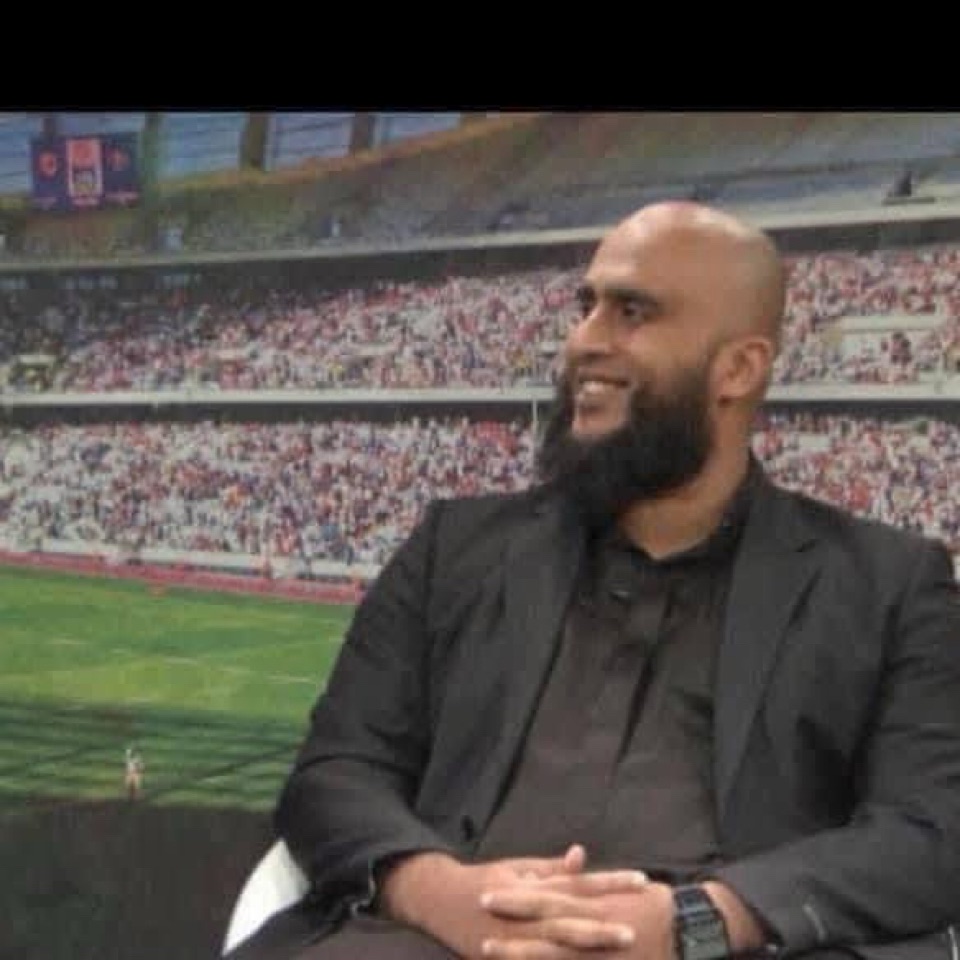
We need to talk about an issue that is important to yours truly, the Bearded one.
As you know, I am brown. No need to adjust your sets — yes, you’re seeing correctly.
Being brown and being Asian is unique. Why? Well, simply because of the rules and regulations that come with it.
In previously written blogs, I have spoken about what happens when Asians get ready to invite someone over: the work, the preparation, and everything in between that is required to carry out such a mission.
But, Bearded brothers and beard-loving sisters, we have yet to address what happens when you actually arrive at the dinner table — and how, as Asians, you need to deal with the matter at hand.
First things first.
When you’re called for dinner (not tea white people), the temptation — especially because you haven’t eaten all day and have built yourself up for what you believe is going to be a banquet — is to go straight in.
No-no.
You don’t want to come across as hungry.
Even though you are.
You wait a minute. Maybe two. Just to make it look like you’re not desperate.
Then, once you enter the dining room, you have to shackle your inner self. You cannot simply sit down and start throwing all the delicious food onto your plate like you’ve just returned from a three-month expedition.
Absolutely not.
Then come the drinks.
The drinks that have been locked away specifically for guests are brought out from the guests’ vault — a highly secure facility where, apparently, my mum and a select few others are the gatekeepers.
Maybe it’s a face-recognition system.
So, after being given the subtle — or not-so-subtle — green light to eat with the grown-ups, you must adhere to The Code.
“O Ayyaz, why is your plate empty?”
This is not a sweet gesture.
This is a front.
I believe it is a coded way of saying:
“Your plate is looking a little empty. Keep it that way.”
And don’t even think about getting adventurous.
If you think one cheeky kebab won’t hurt because they’re not counting them, you can bet your bottom dollar that they are.
One kebab eaten without being signed off by the head chef is like losing an organ.
The food distribution is essentially a military operation.
But while all this is happening, another operation is taking place around the dinner table.
The conversation.
And, more importantly, the art of conversation.
Jay from The Inbetweeners would be impressed by the amount of truth-stretching that takes place around an Asian dinner table.
If you thought your parents were embarrassed by some of your life choices, suddenly it becomes a game of verbal tennis.
“My son is doing this as a job.”
“My daughter has this degree.”
“I have this business.”
“My other son has that business.”
And before you know it, you’re witnessing the Asian equivalent of the Forbes Rich List.
Flexing.
Showing off.
Subtle competition.
It’s all on full display.
Nobody is quite sure how the conversation got here, but somehow someone’s cousin’s neighbour’s son has just secured a six-figure salary.
And then, after you’ve eaten enough food to comfortably feed a small village, comes the final boss.
Dessert.
“Oh, no, no, I’m fine. I couldn’t possibly eat anything else.”
This is where you pretend you don’t want dessert.
You do.
Everyone knows you do.
And then comes coffee.
You don’t want that either.
Apparently.
Yet somehow, 30 seconds later, you’re sitting there with a plate of dessert and a coffee in your hand, wondering how you’ve ended up in this situation.
This is the Asian dinner table.
It isn’t simply dinner.
It’s an operation.
There are rules.
There are protocols.
There is food surveillance.
There is diplomacy.
There is social competition.
And, most importantly, there is absolutely no chance of you leaving hungry.
In times like this, being white seems simple enough.
Make a one-time donation
Make a monthly donation
Make a yearly donation
Choose an amount
Or enter a custom amount
Your contribution is appreciated.
Your contribution is appreciated.
Your contribution is appreciated.



Leave a comment